






Tropalli
17,270.00 MXNCeremonial chair inspired by the Mesoamerican icpalli. Pine and ocote from the State of Mexico defined by a pyramidal geometry.
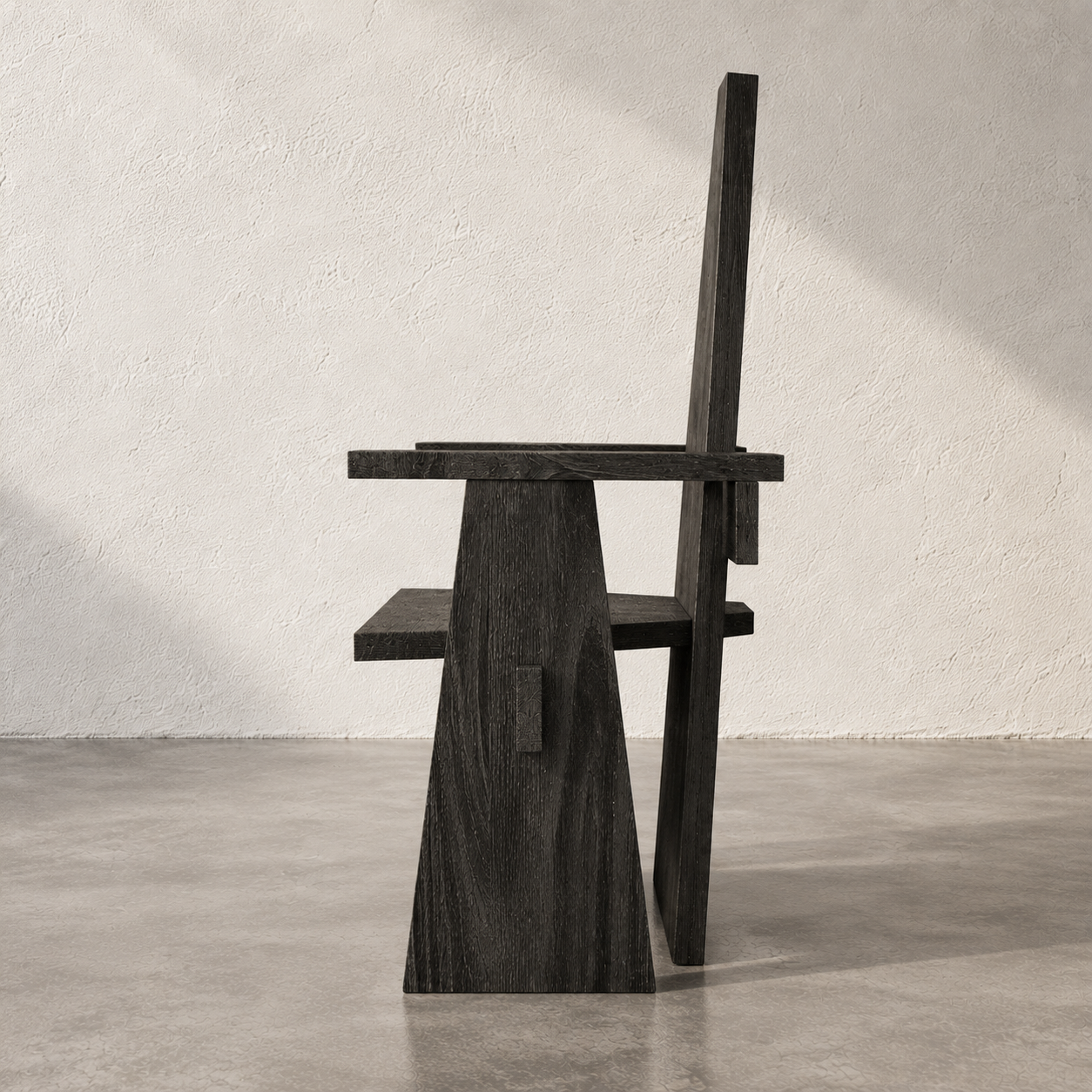
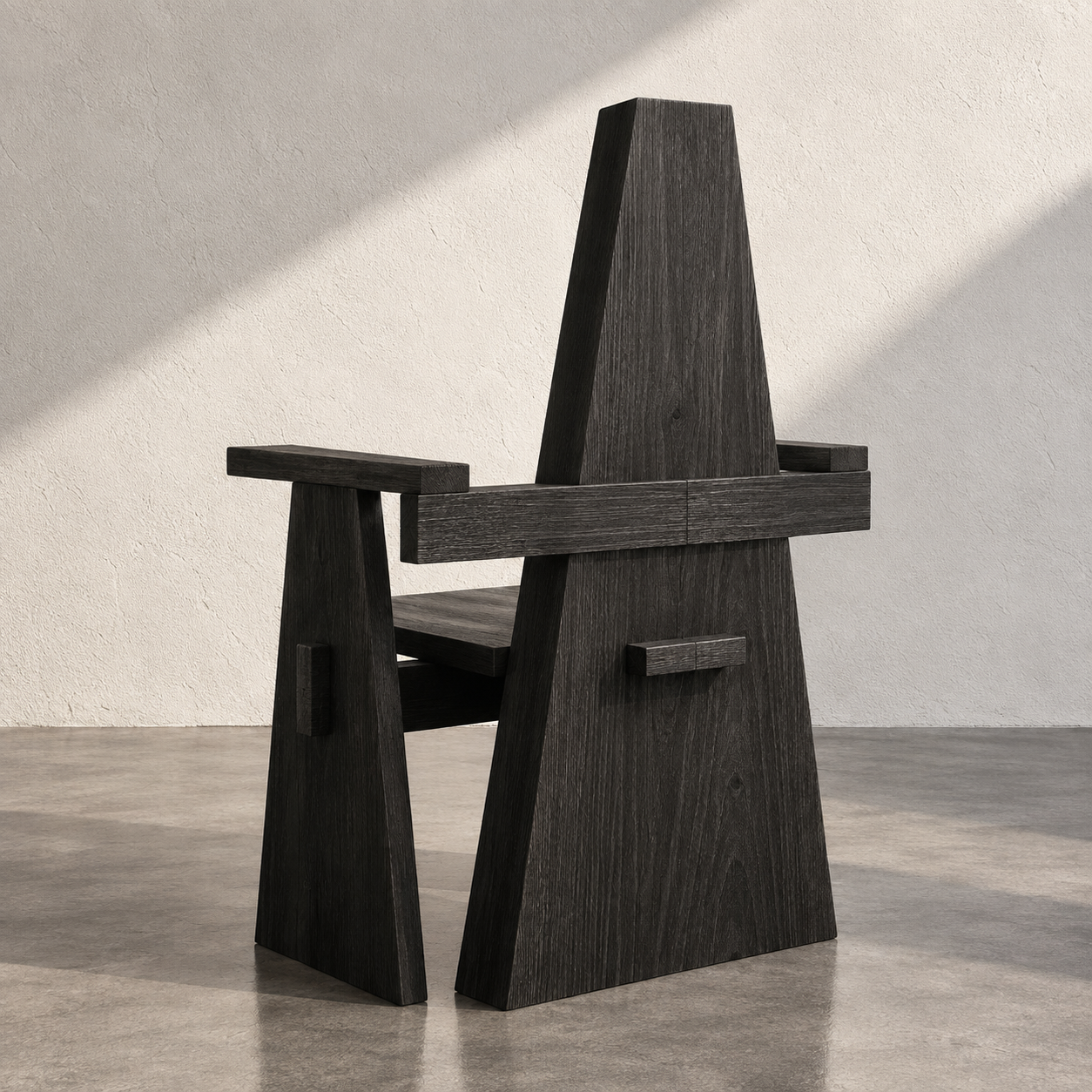
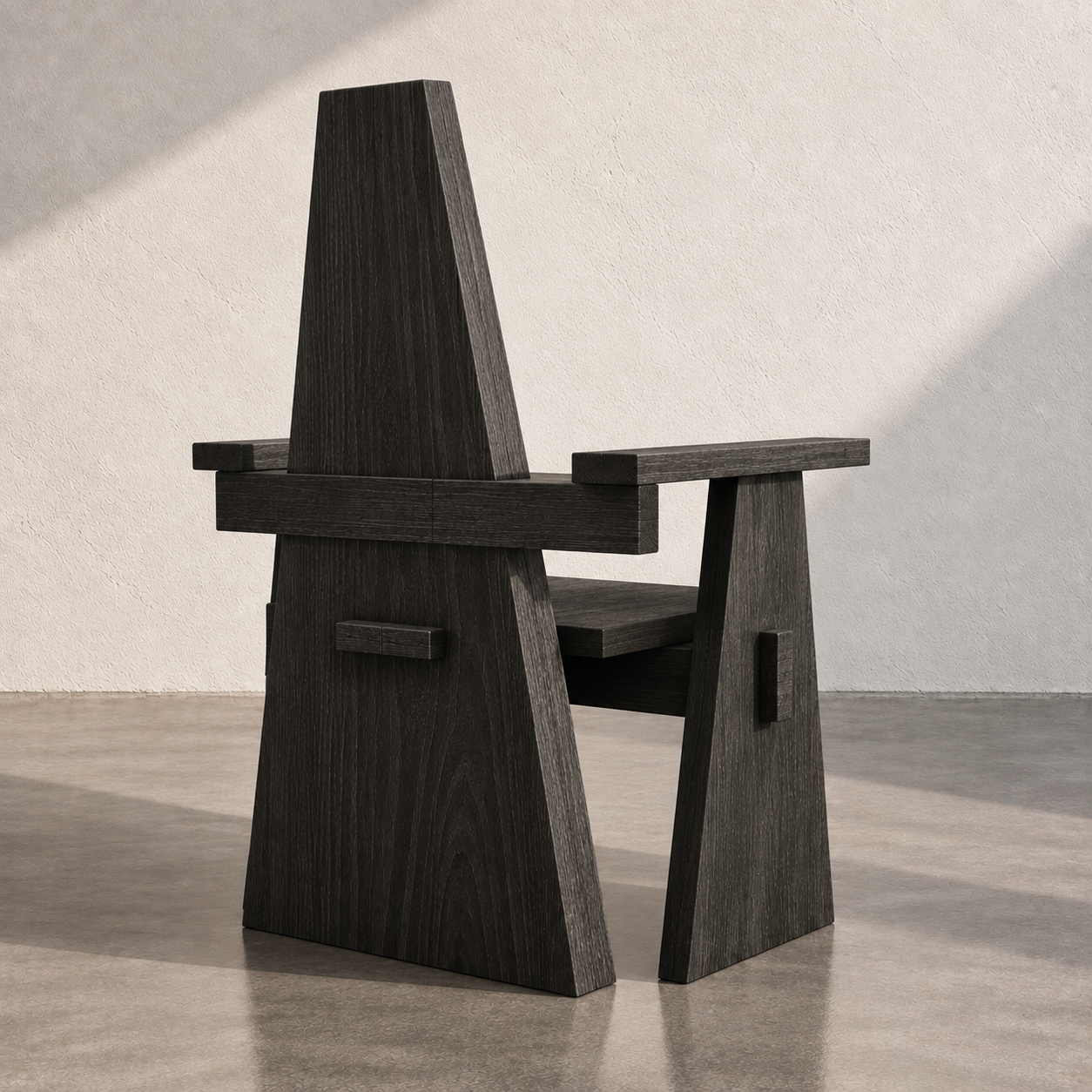
Ceremonial chair inspired by the Mesoamerican icpalli. Pine and ocote wood from the State of Mexico, built from a pyramidal geometry that runs through the entire piece.
Presentation
Ceremonial chair of monumental character inspired by the ancient icpalli, the seat associated with authority in the Nahua world. Tropalli does not seek to reproduce a historical seat, but rather to reinterpret its presence through a contemporary geometry. The backrest rises and recedes, while the seat, the armrests, and its three structural supports follow the same pyramidal logic. Built in pine and ocote wood from the State of Mexico, the piece combines thick planks, cabinetmaking, and an assembly system designed to make it rigid, resistant, and durable.
Specifications
Design
Cristóbal Ramírez de Aguilar Ramírez
Year
2026
Origin
Handmade in Mexico.
Materials
Pine and ocote wood from the State of Mexico.
Black staining.
Technique
Brushed wood to highlight the natural grain. Construction from 4 cm thick planks. Assembly through tongue-and-groove joints and screws to increase the strength and rigidity of the structure. Crafted by cabinetmakers from the State of Mexico.
Dimensions
70 × 120 × 54 cm (width × height × depth)
Seat height
45 cm
Use
Interior.
Variations
Each piece is handcrafted. The grains, knots, tones, and natural characteristics of the wood may vary from one piece to another. Brushing and staining allow the grain to remain visible, ensuring that each Tropalli retains its own expression.
Origin
What would happen if a seat of authority could be built once again from a single geometry?
Tropalli is born from that question. Its starting point is the icpalli, the seat associated with authority in the Nahua world, but the piece does not seek to reconstruct a form from the past. It seeks to recover an idea: that of the seat as a place that not only supports the body but also defines the presence of the person occupying it.
From this reference, the chair develops from a pyramidal geometry that repeats throughout its structure. The backrest rises and recedes towards the top; the armrests open and contract; the seat and its three structural supports follow the same logic. No element functions in isolation. All respond to the same rule, as if the chair had been built from a single form that transforms according to each function.
This geometry gives Tropalli a presence that approaches architecture. Its vertical proportions and large wooden surfaces mean it is no longer perceived as a light object and acquires an almost monumental condition. The seat remains at an everyday height, while the backrest rises above the body and builds its own space around it.
The wood comes from the State of Mexico and is worked by cabinetmakers. The four-centimeter-thick planks maintain a forceful presence and allow the structure to express its own weight. Before being stained, the wood is brushed to reveal the grain. The natural lines run through each element and accompany its geometry, making the material and form read as one.
The construction follows a direct logic. The elements are joined using tongue-and-groove joints and screws, combining a contemporary assembly system with precise craftsmanship. The joints do not seek to disappear completely: they are part of the reading of the piece and make evident the way each component finds its place within the structure.
Tropalli thus finds itself between different times. It starts from an idea linked to ancient Mesoamerican seats of authority, but it is built with local wood, contemporary craft, and its own geometry. It does not try to represent the past, but rather to ask how a form associated with power, permanence, and presence could exist again today.
More than a ceremonial chair, Tropalli proposes a place. An object where wood, geometry, and the body meet to make the act of sitting a form of presence.